Feeling discomfort that seems to wrap from your ribs toward your back can be confusing because several muscles, nerves, bones, and internal organs occupy this area. Pain around ribs and back symptoms may come from something relatively simple, such as a strained muscle, but they can also occur with rib injuries, nerve irritation, lung conditions, kidney problems, or digestive issues. The location, type of pain, and other symptoms often provide useful clues.
Some causes improve with rest and basic home care. However, severe pain, trouble breathing, chest pressure, fainting, fever with worsening symptoms, or pain after a significant injury needs prompt medical attention.
This guide explains common possibilities without assuming that one symptom points to a specific diagnosis.
What Can Pain Around the Ribs and Back Feel Like?
Rib and back discomfort does not feel the same for everyone.
For example, muscle-related pain may feel sore or tight, while nerve pain can feel burning, shooting, or unusually sensitive. Meanwhile, inflammation around the ribs may produce sharper discomfort during movement or deep breathing.
You might notice:
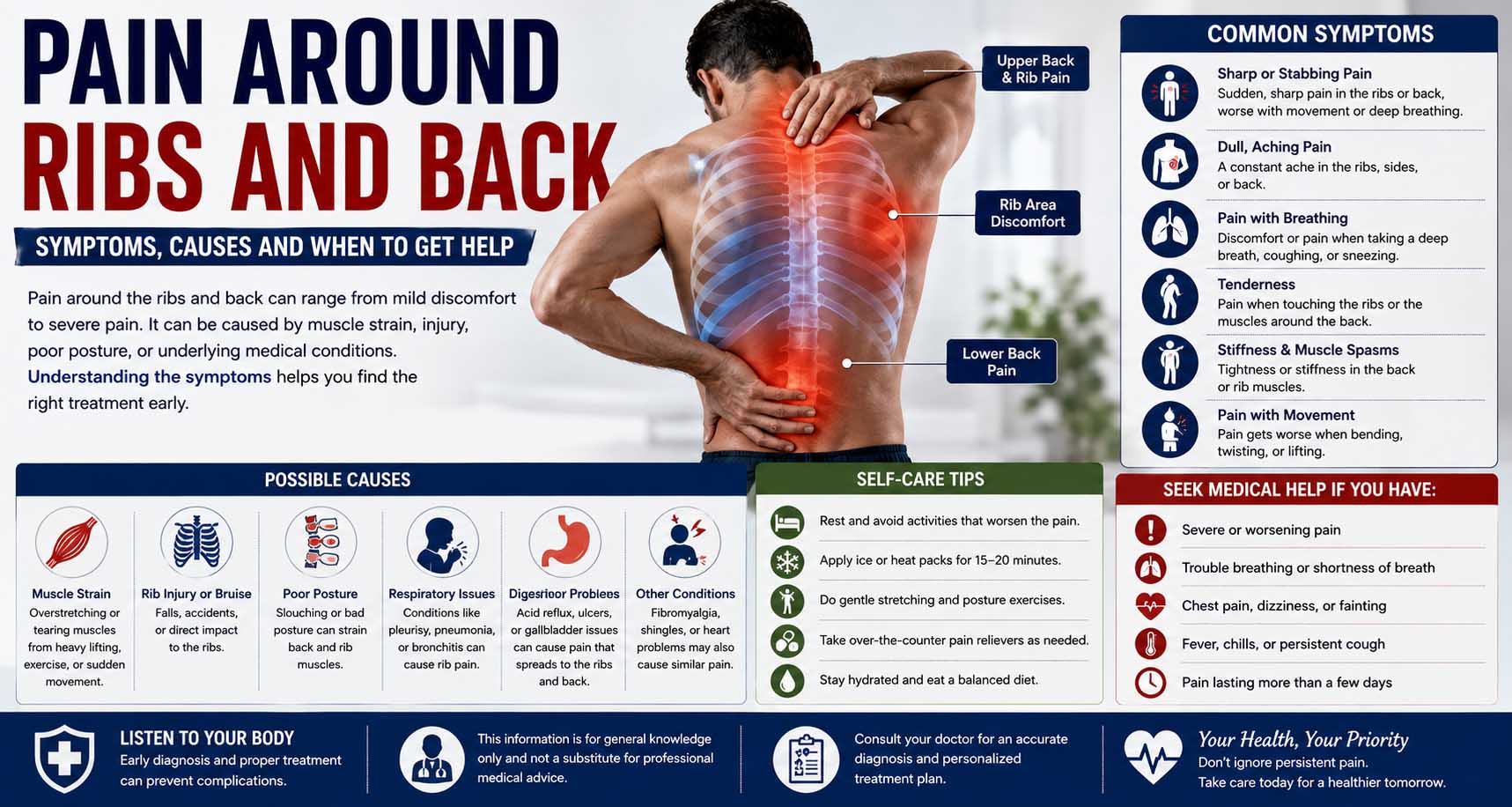
- Aching along one or both sides of the ribs
- Sharp pain during a deep breath
- Pain that wraps around the torso
- Tenderness when touching the area
- Back stiffness
- Burning or tingling
- Pain with twisting or bending
- Discomfort after coughing
- Pain that becomes worse in certain positions
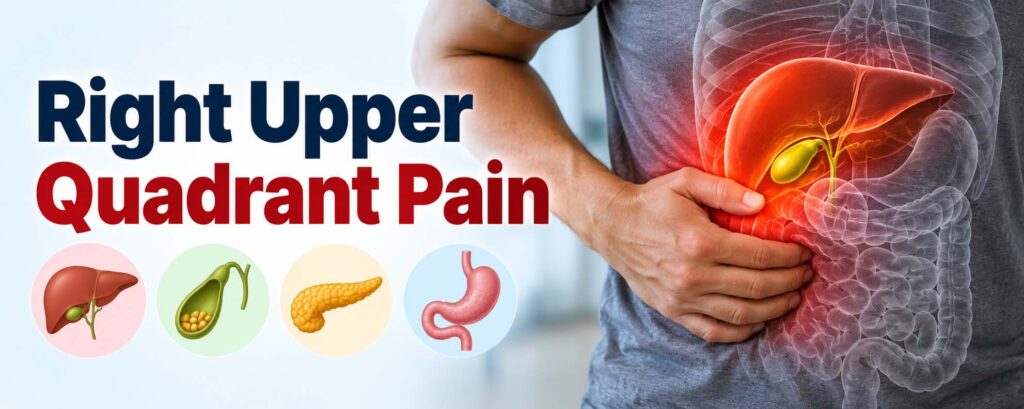
Where the discomfort starts also matters. For instance, pain under right breast can sometimes involve the chest wall, ribs, muscles, lungs, gallbladder, or other nearby structures, depending on the exact location and accompanying symptoms.
Common Causes of Pain Around Ribs and Back Symptoms
Several conditions can cause pain in this region. Therefore, the pattern of symptoms is usually more informative than the presence of pain alone.
Muscle Strain
A strained muscle is one of the more straightforward explanations.
The muscles between and around your ribs can become irritated after lifting, twisting, exercising, coughing repeatedly, or making a sudden movement.
Typically, muscular pain changes when you move. It may also hurt when you press the affected area.
For instance, turning your torso, reaching overhead, coughing, or taking a deep breath may increase discomfort.
Minor strains often improve gradually with activity modification and time. However, persistent or severe pain should be assessed rather than assumed to be muscular.
Rib Injury
A fall, sports collision, car accident, or strong blow to the torso can bruise or fracture a rib.
Rib injuries often cause localized tenderness and pain that gets worse with deep breathing, coughing, laughing, or certain movements.
Because taking shallow breaths to avoid pain can cause other problems, significant rib injuries deserve medical guidance.
After a major chest injury, seek urgent assessment if you develop shortness of breath, worsening chest pain, coughing up blood, dizziness, or other concerning symptoms.
Pain Around Ribs and Back Symptoms on the Left Side
Pain around ribs and back symptoms left side can have many explanations, ranging from muscles and ribs to digestive organs and the lungs.
Musculoskeletal pain becomes more likely when the discomfort clearly follows lifting, exercise, prolonged posture, or a minor injury. Likewise, pain that changes significantly when you twist or press the area can suggest involvement of the chest wall.
However, left-sided chest or rib discomfort should not automatically be dismissed as a muscle problem.
Heart-related problems can sometimes produce chest pressure or discomfort that spreads toward the arm, shoulder, jaw, or back. Symptoms may also include shortness of breath, sweating, nausea, or lightheadedness.
If you experience new or severe chest pressure, especially with these symptoms, seek emergency medical care.
Digestive conditions can sometimes cause upper abdominal discomfort that seems close to the lower ribs as well.
Pain Around Ribs and Back Symptoms on the Right Side
Pain around ribs and back symptoms right side can also originate from muscles, ribs, lungs, kidneys, nerves, or abdominal organs.
For example, gallbladder problems can cause pain in the upper-right abdomen and may sometimes radiate toward the back or right shoulder blade. The discomfort may occur after eating, particularly after a fatty meal, although symptom patterns vary.
Meanwhile, kidney problems can cause pain toward the side or back beneath the lower ribs.
When discomfort extends toward the abdomen, information about pain on right side of stomach can help you understand which nearby structures may be involved, although location alone cannot identify the cause.
Severe right-sided pain with fever, persistent vomiting, jaundice, urinary symptoms, or significant tenderness warrants medical evaluation.
Pain Around Ribs and Lower Back Symptoms
When discomfort occurs lower down, the kidneys, spine, muscles, and nearby abdominal structures become more relevant possibilities.
Pain around ribs and lower back symptoms can occur after lifting or strenuous activity, particularly if the muscles have been overstretched.
However, kidney problems may cause flank pain in the area between the lower ribs and hips.
Kidney Stones
Kidney stones can cause intense pain in the side and back, often below the ribs.
The pain may come in waves and can travel toward the lower abdomen or groin.
Other possible symptoms include:
- Nausea or vomiting
- Blood in the urine
- Urinary urgency
- Pain during urination
Severe pain or urinary symptoms deserve medical assessment.
Kidney Infection
A kidney infection can also cause pain in the side or back.
However, fever, chills, urinary burning, frequent urination, nausea, or feeling generally unwell may accompany the pain.
Because kidney infections can become serious, prompt medical care is appropriate when these symptoms occur.
Pain lower in the abdomen can have a different set of causes. Therefore, lower left abdomen pain should be considered separately if the discomfort is mainly below the rib cage rather than in the flank or chest wall.
Lung Conditions That Can Cause Rib and Back Pain
The lungs themselves have limited pain sensation, but the tissues surrounding them and the chest wall can produce pain.
Pleurisy
The pleura are thin layers of tissue surrounding the lungs and lining the inside of the chest.
When these tissues become inflamed, breathing can cause sharp chest or rib pain. This is often called pleuritic pain.
The discomfort may become worse with deep breaths, coughing, or sneezing.
Because pleuritic pain can have several causes, including infections and more serious conditions, unexplained pain with breathing deserves medical evaluation.
Pneumonia
Pneumonia can sometimes cause chest or rib discomfort, particularly when inflammation involves the pleura.
Other symptoms can include cough, fever, chills, tiredness, and shortness of breath.
People living with someone who has a respiratory infection may also wonder is pneumonia contagious; the answer depends on the underlying cause, since some viruses and bacteria that lead to pneumonia can spread between people.
Chest pain accompanied by breathing difficulty, high fever, confusion, bluish lips or skin, or rapidly worsening illness requires prompt medical attention.
Breathing Problems and Rib Discomfort
Repeated coughing can strain the muscles around the ribs.
Likewise, persistent wheezing or labored breathing can make the chest wall feel sore.
However, wheezing is a symptom rather than a diagnosis. Asthma, respiratory infections, allergic reactions, chronic lung disease, and other conditions can cause it.
If breathing noises are part of your symptoms, learning how to stop wheezing should start with identifying the underlying cause rather than relying only on temporary home remedies.
Sudden severe wheezing, difficulty speaking because of breathlessness, blue or gray lips, or severe breathing difficulty requires emergency care.
Nerve-Related Rib and Back Pain
Nerves that travel from the spine around the rib cage can become irritated or compressed.
As a result, pain may follow a narrow band around one side of the torso.
Thoracic Nerve Irritation
Problems affecting nerves in the thoracic spine can cause pain, tingling, numbness, or burning around the ribs.
Movement or posture may influence the symptoms.
However, diagnosing nerve compression usually requires a physical examination because muscular and nerve-related pain can feel similar.
Shingles
Shingles can cause burning, tingling, itching, or sensitivity along a band of skin, usually on one side of the body.
A rash with fluid-filled blisters commonly follows, although pain can begin before the rash becomes obvious.
Early medical advice can be useful because antiviral treatment works best when started promptly after shingles appears.
Digestive Problems That May Feel Like Rib Pain
Digestive organs sit beneath the lower ribs, so digestive discomfort can sometimes be mistaken for rib or back pain.
Gas and bloating may cause temporary pressure beneath the ribs. Meanwhile, acid reflux more often produces burning discomfort behind the breastbone.
Gallbladder inflammation or gallstones can produce more significant upper-right abdominal pain.
Pancreatic conditions can sometimes cause upper abdominal pain that radiates into the back. Persistent or severe upper abdominal pain, especially with vomiting, fever, or significant illness, needs medical assessment.
Therefore, pain that appears to involve the ribs may sometimes originate deeper inside the abdomen.
Quick Guide to Possible Causes
| Pain Pattern | Possible Causes | Other Clues |
|---|---|---|
| Pain after lifting or twisting | Muscle strain | Worse with movement |
| Tender spot after an injury | Bruised or fractured rib | Pain with touch or breathing |
| Sharp pain with breathing | Pleural or chest-wall irritation | Worse with deep breaths |
| Side/back pain below ribs | Kidney problem or muscle strain | Check for urinary symptoms |
| Upper-right abdominal pain to back | Gallbladder problem | May follow meals |
| Burning band on one side | Nerve irritation or shingles | Tingling, sensitivity, possible rash |
| Rib pain with cough and fever | Respiratory infection | Tiredness or breathing symptoms |
This table can help organize symptoms, but it cannot diagnose their cause.
Pain Around Ribs and Back Symptoms: NHS-Style Warning Signs
People searching for pain around ribs and back symptoms NHS are often trying to determine whether they need urgent care.
General emergency warning signs include severe difficulty breathing, sudden significant chest pain, coughing up blood, loss of consciousness, or serious symptoms after a major injury.
New chest pain accompanied by sweating, nausea, breathlessness, or pain spreading into the arm, jaw, neck, or back also needs emergency assessment because heart problems can present this way.
Likewise, seek prompt medical advice for:
- Persistent fever with chest or back pain
- Worsening shortness of breath
- Severe or unexplained pain
- Blood in the urine
- Persistent vomiting
- New weakness or numbness
- A painful blistering rash
- Pain that continues or keeps returning
- Significant pain after a fall or collision
Your local healthcare service may use different triage pathways, so follow the emergency and urgent-care guidance available where you live.
How Doctors Work Out the Cause
Because rib and back pain has many possible causes, clinicians usually begin with your history.
They may ask when the pain started, whether you were injured, what movements affect it, and whether you have respiratory, digestive, urinary, or neurological symptoms.
Next, a physical examination can check the chest wall, breathing, abdomen, spine, and tender areas.
Depending on the suspected cause, testing might include a chest X-ray, urine test, blood tests, ECG, ultrasound, or other imaging.
Not everyone needs extensive testing. Instead, the evaluation depends on symptoms, age, medical history, examination findings, and risk factors.
Home Care for Mild Musculoskeletal Pain
If a healthcare professional has ruled out concerning causes or the discomfort clearly follows a minor muscle strain, simple measures may help.
Avoid activities that repeatedly trigger the pain for a short period, but try not to remain completely inactive for days unless advised otherwise.
Gentle movement can prevent excessive stiffness.
Heat or cold may also provide temporary comfort depending on the injury and personal preference.
Over-the-counter pain medicines may help some people, but they are not appropriate for everyone. Therefore, follow label directions and ask a pharmacist or healthcare professional if you have medical conditions, take other medications, are pregnant, or are unsure which option is safe.
Do not use home treatment to delay evaluation of severe or unexplained symptoms.
Frequently Asked Questions
Can back muscles cause pain around the ribs?
Yes. Muscles around the spine, chest wall, and between the ribs can become strained or irritated. Muscular pain often changes with movement, posture, coughing, or pressure on the area.
Can gas cause pain under the ribs and in the back?
Gas and bloating can cause pressure or discomfort beneath the ribs, and some people perceive digestive pain toward the back. However, severe or persistent pain should not automatically be blamed on gas.
Why do my ribs and back hurt when I breathe?
Muscle strain, rib injuries, and inflammation around the lungs can cause pain with breathing. However, chest pain with shortness of breath can also signal more serious conditions, so unexplained or severe symptoms require medical assessment.
Can kidney problems cause pain near the ribs?
Yes. The kidneys sit toward the back below the lower ribs. Kidney stones and infections can cause flank or back pain, often with urinary or systemic symptoms.
How long should rib and back pain last?
There is no single normal duration because the cause matters. Minor muscle discomfort may gradually improve, while other conditions require treatment. Seek medical advice if pain persists, worsens, repeatedly returns, or comes with concerning symptoms.
When Rib and Back Pain Deserves Attention
Most pain around ribs and back symptoms cannot be diagnosed from location alone. Muscle strain and minor chest-wall irritation are common possibilities, yet lung, kidney, digestive, nerve, and cardiovascular conditions can produce discomfort in similar areas.
Pay attention to what triggers the pain and whether other symptoms appear. Mild discomfort after an obvious strain may improve with sensible home care, while persistent or unexplained pain deserves professional evaluation.
Most of all, do not wait on severe chest pain, significant breathing difficulty, fainting, coughing up blood, rapidly worsening symptoms, or serious pain after an injury. Those warning signs need urgent medical attention rather than online self-diagnosis.